Episode
October 24, 2025

Always Be Learning: A Guide to Continuous Growth

What is Continuous Learning and Why Does It Matter for the Trades?

Continuous learning is the ongoing process of acquiring new skills, knowledge, and expertise throughout your career - and it's becoming essential for trades businesses that want to stay competitive. Unlike traditional training that happens once and stops, continuous learning never ends.

Here's what continuous learning includes:

  • Formal learning - courses, certifications, workshops
  • Social learning - mentorship, peer discussions, team collaboration
  • Self-directed learning - reading, online tutorials, experimenting with new techniques
  • On-the-job learning - observing experienced workers, trying new methods, learning from mistakes

The numbers tell a clear story. Companies that adopt continuous learning are 92% more likely to innovate and 46% more likely to be first to market. With millennials making up 75% of the workforce by 2025 - and 59% saying professional development is extremely important to them - businesses that don't invest in ongoing learning will struggle to attract and keep good people.

For trades businesses specifically, this matters because technology is changing everything. From AI-powered diagnostic tools to new installation techniques, the skills that got your team here won't necessarily get them there. The companies that survive and thrive will be the ones that help their people grow continuously.

But here's the thing - 75% of workers are more likely to quit if they don't get development support. Meanwhile, engaged employees (who often come from companies with strong learning cultures) drive 21% higher profitability and 40% better quality output.
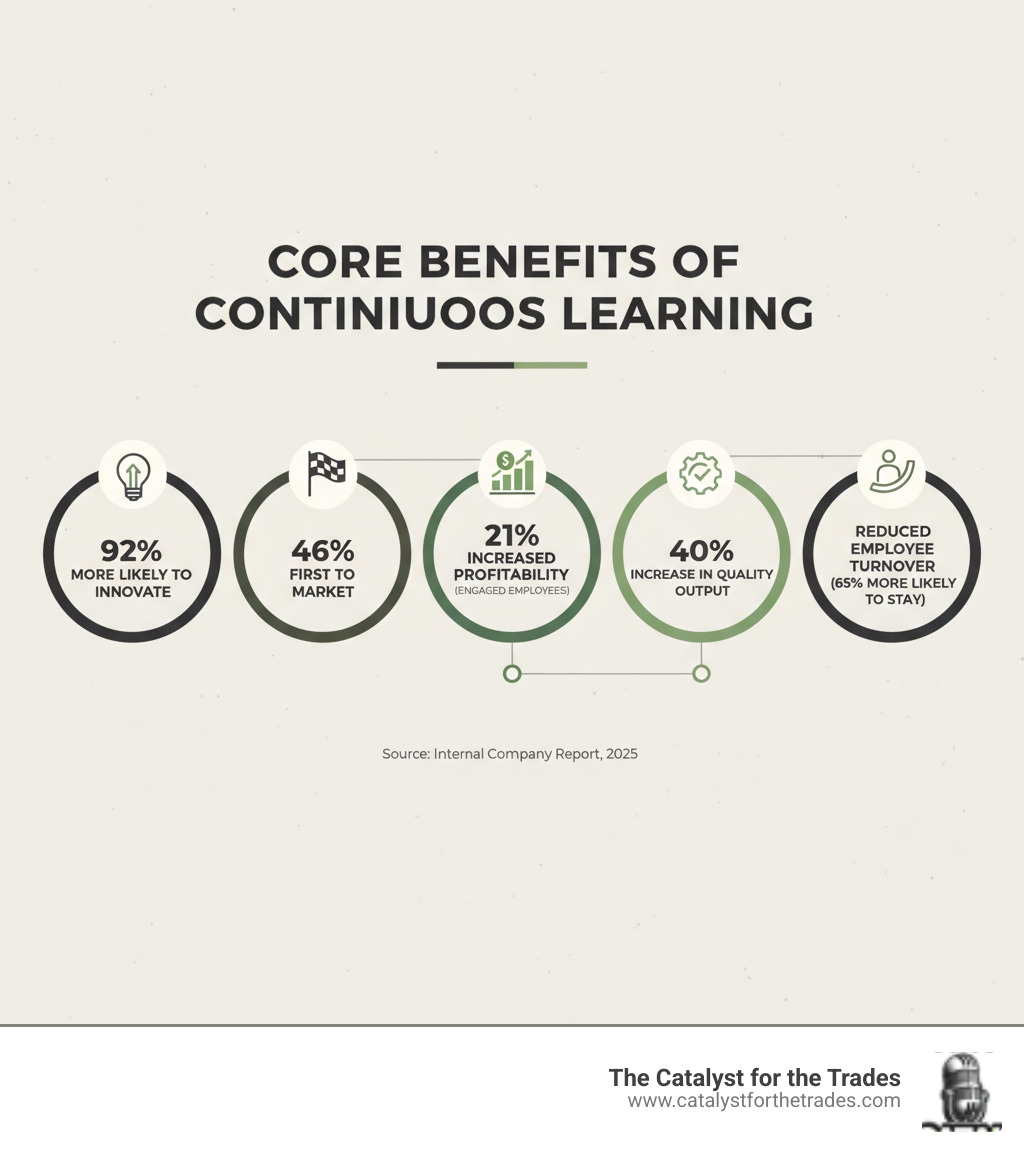
Infographic showing the core benefits of continuous learning including 92% more likely to innovate, 46% more likely to be first to market, 21% increased profitability from engaged employees, 40% increase in quality output, and reduced employee turnover with 65% more likely to stay when feeling empowered - continuous learning infographic

The 'Why': Unpacking the Business Case for Constant Growth

Here's the reality: the trades industry is moving fast, and standing still means falling behind. New technologies pop up monthly, customer expectations keep rising, and what worked five years ago might not cut it today. That's why continuous learning isn't just a nice bonus for your team - it's the difference between thriving and barely surviving.

positive business growth metrics - continuous learning

Competitive Advantage and Innovation

Picture this: your competitor's team is still doing things the old way while your technicians are installing smart thermostats with their eyes closed and troubleshooting complex systems using the latest diagnostic tools. Who do you think customers will choose?

Continuous learning gives your business a real competitive edge. When your team stays current with new techniques, technologies, and industry best practices, you can offer services that others simply can't. The numbers back this up too - companies that adopt a continuous learning approach are 92% more likely to innovate.

Innovation in the trades doesn't mean reinventing the wheel. It might be as simple as finding a faster way to diagnose problems, offering new services like energy audits, or improving how you communicate with customers. When your team is always learning, they're always finding better ways to work.

Employee Retention and Engagement

Let's talk about your workforce. If you're hiring millennials (and you probably are, since they make up most of today's workers), you need to know something important: 59% of millennials say professional development is extremely important when choosing where to work.

Think about what this means for your business. You could be losing great people simply because they don't see opportunities to grow with you. On the flip side, when you invest in continuous learning, you're telling your team that you care about their future. This creates loyalty that's hard to break.

The financial impact is huge. Engaged companies see 21% increased profitability, and their teams produce 40% higher quality work. When people feel valued and see a path forward, they stick around and give their best effort.

Increased Profitability and Improved Customer Experience

Here's where continuous learning really pays off - literally. When your team knows the latest techniques and uses current technology, they work faster, make fewer mistakes, and deliver better results. That means more jobs completed, less time spent on callbacks, and happier customers who refer their friends.

A skilled, confident technician creates a completely different customer experience than someone who's unsure or outdated in their approach. They can explain problems clearly, offer modern solutions, and handle unexpected challenges without breaking a sweat.

Smart companies are already seeing these benefits. They're investing in their people's growth and watching their businesses transform as a result. To see what forward-thinking trades businesses are doing right now, check out The Future of Home Services: What Smart Companies Are Doing Now.

The bottom line? Continuous learning isn't an expense - it's an investment that pays dividends through better work, happier employees, and more profitable operations.

The Landscape of Learning: Types and Approaches

Understanding the "why" behind continuous learning is crucial, but knowing "how" to implement it requires exploring the many ways people actually learn. The good news? Learning isn't confined to dusty classrooms anymore. Today's learning landscape is rich, varied, and perfectly suited for busy trades professionals.

diverse learning environments - continuous learning

Different Types of Continuous Learning

Think of continuous learning as a toolkit with multiple approaches, each serving different needs and learning styles.

Formal learning is what most of us picture when we think "training." This includes structured courses, industry certifications (like HVAC NATE certifications or plumbing licenses), workshops, and webinars. These programs follow a defined curriculum and often come with credentials that customers and employers recognize.

Social learning happens through interaction with others. This is where mentorship programs shine, along with peer discussions and team collaboration. In the trades, there's incredible value in watching a seasoned technician troubleshoot a complex problem. That "aha moment" when you see how experience translates into solutions? That's social learning at its best.

Self-directed learning puts you in the driver's seat. It includes reading industry publications, watching YouTube tutorials (honestly, YouTube is a goldmine for trades professionals), listening to podcasts, and experimenting with new tools or techniques. This approach lets you learn what you need, when you need it.

Microlearning breaks information into bite-sized pieces that busy professionals can actually digest. Think five-minute videos, quick quizzes, or helpful infographics. This approach is perfect for technicians who might only have a few minutes between jobs. Research shows microlearning can increase engagement and improve long-term knowledge retention by up to 50%.

Knowledge Retention and the Forgetting Curve

Here's something we've all experienced: you attend a great training session, feel enlightened, then struggle to remember the key points just weeks later. This isn't a personal failing - it's called the "forgetting curve," and it's a real challenge.

Our memory of newly learned information gets halved within days when not reinforced. That expensive training you invested in? Without follow-up and practice, much of it simply evaporates.

Continuous learning directly tackles this problem. Instead of one-and-done training sessions, it provides ongoing reinforcement through spaced repetition and real-world application. When learning becomes a regular habit rather than a rare event, information moves from short-term to long-term memory where it actually becomes useful.

Continuous Learning vs. Traditional Learning vs. Lifelong Learning

While these terms get thrown around interchangeably, they're actually quite different. Understanding these distinctions helps you choose the right approach for your business needs.

FeatureTraditional LearningLifelong LearningContinuous Learning
Primary GoalObtain a degree/qualification; acquire foundational knowledgePersonal growth, intellectual curiosity, self-fulfillmentSkill development, career advancement, organizational adaptability
DurationFixed period (e.g., degree program, one-off course)Throughout one's entire life, often self-initiatedOngoing, integrated into work/professional life, often employer-driven
FocusBroad subjects, academic knowledgeAny subject of personal interestJob-specific skills, industry trends, professional development
MotivationFormal education, career entryPersonal interest, self-improvementProfessional relevance, career progression, business needs
StructureHighly structured, formalCan be formal or informal, self-pacedBlend of formal, informal, social, often structured by employer
Relevance to TradesApprenticeships, trade school certificationsLearning a new hobby, reading historyMastering new diagnostic tools, learning new installation methods, adapting to smart tech

Traditional learning gives you the foundation - your apprenticeship, trade school, or initial certifications. Lifelong learning is broader and more personal - maybe you're curious about renewable energy or want to understand business finances better.

Continuous learning sits right in the sweet spot for trades businesses. It's specifically designed to keep you and your team professionally sharp and competitive. It's about mastering that new smart thermostat installation, understanding the latest diagnostic software, or learning how to explain complex repairs to customers in simple terms.

The beauty of continuous learning is that it adapts to your world - busy schedules, hands-on work, and constantly evolving technology. It's not about becoming a perpetual student; it's about staying ahead in your trade.

How to Build a Culture of Continuous Learning in Your Trades Business

Building a culture of continuous learning isn't something that happens overnight. It requires intentional effort, commitment, and the right environment. For trades businesses, where schedules are tight and hands are often dirty, it might seem daunting. But trust us, the payoff is immense.

Leadership Commitment and Manager Support

It all starts at the top. When leaders champion continuous learning, it sends a powerful message throughout the organization that growth is valued. Our podcast episode on Embracing Change: The Future of Leadership digs into how vital leadership is in setting the tone for adaptability and development. Leaders need to actively participate in their own learning journeys and visibly support their teams' efforts.

Managers are the linchpins. They're on the front lines, guiding their teams daily. Training managers to support professional development as a core skill is crucial. Unfortunately, only 35% of employees were encouraged to learn by their manager in the past six months. This gap needs to be addressed. Managers should be equipped to identify learning opportunities, provide feedback, and empower their team members to dedicate time to skill-building. When managers prioritize learning, they foster trust and engagement.

Creating Systems for Learning

To make continuous learning a reality, it needs to be systematized, not just left to chance. This means creating clear pathways and resources. Just like Mike Abramowitz explains in How Systems Create Freedom: Mike Abramowitz's Blueprint for Trades Success, good systems free up time and energy.

Consider establishing:

  • Dedicated learning time: Even an hour a week can make a difference.
  • Accessible resources: A shared library of manuals, online courses, or video tutorials.
  • Feedback mechanisms: Regular check-ins and performance reviews that include learning goals.

Overcoming Common Challenges

We know what you're thinking: "Sounds great, but how do we actually do this with our busy schedules?" Implementing continuous learning isn't without its problems.

  • Time Constraints: This is often the biggest challenge for trades businesses. Technicians are out in the field, busy with appointments. The solution lies in flexible, bite-sized learning (microlearning) and integrating learning into daily workflows.
  • Budget Issues: Investing in training can seem expensive, especially for small businesses. However, the ROI on upskilling existing employees often far outweighs the cost of hiring new ones. We'll explore cost-effective options shortly.
  • Employee Resistance: Some team members might be comfortable with the status quo and resistant to learning new ways. This often stems from a fear of failure or a lack of understanding of "what's in it for them." Effective Change Management strategies are key here, emphasizing the benefits to their career and job security.

Strategies for implementing continuous learning

Now that we've tackled the "why" and acknowledged the challenges, let's get actionable. Here are concrete strategies your trades business can use to foster continuous learning:

  • Personalized Learning Paths: One size rarely fits all. Tailor learning opportunities to each employee's current skills, career goals, and preferred learning style. An apprentice might need foundational training, while a senior technician might benefit from advanced diagnostic courses or leadership development. When professional development aligns with personal aspirations, buy-in skyrockets.
  • Mentorship Programs: Pair experienced technicians with newer team members. This is a powerful form of social learning, allowing knowledge transfer and skill development in a real-world context. Mentors gain leadership experience, and mentees benefit from direct guidance. As Jason Walker's playbook for outshining giants in HVAC shows, internal expertise is a huge asset; read more in From Tech to Titan: Jason Walker's Playbook for Outshining Giants in HVAC.
  • Cross-Training and Job Rotations: Encourage technicians to learn skills outside their immediate specialty. A plumbing tech learning basic electrical troubleshooting, or an HVAC installer understanding the nuances of smart thermostat integration, makes your team more versatile and resilient.
  • Knowledge Sharing Sessions: Implement regular (e.g., weekly or monthly) "lunch and learn" sessions where team members share insights, demonstrate new tools, or discuss challenging jobs. This fosters a collaborative learning environment and leverages the collective intelligence of your team.
  • Encouraging Experimentation and Learning from Mistakes: Create a safe space where technicians can try new approaches without fear of severe reprimand if something doesn't go perfectly. Analyzing what went wrong in a constructive way is a powerful learning tool. As we often say, if you Want to Innovate Faster? Start Failing Smarter.

The role of technology in continuous learning

Technology isn't just changing the trades; it's revolutionizing how we learn within them. For continuous learning to be effective and scalable in today's environment, leveraging the right tools is non-negotiable.
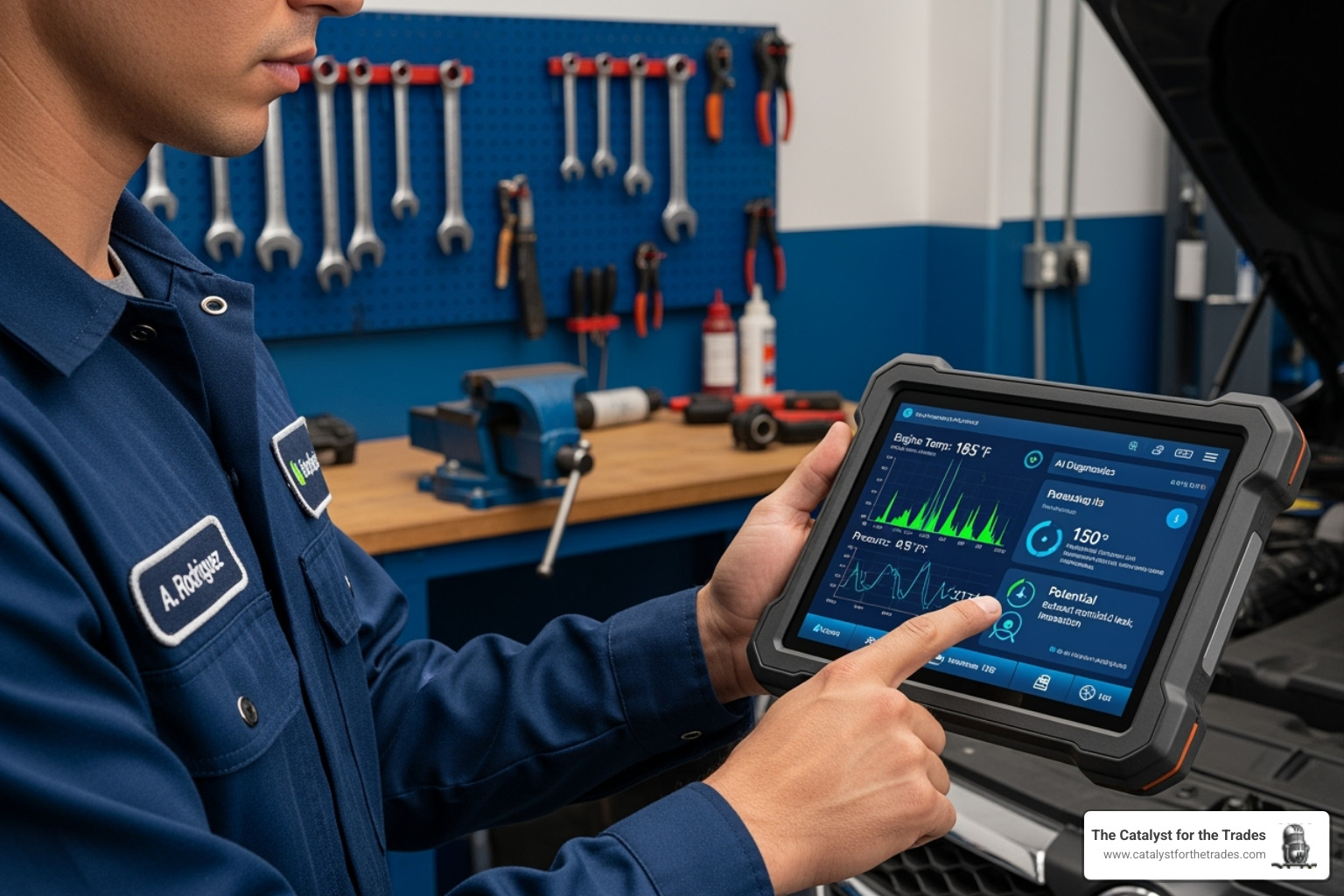
technician using an AI-powered diagnostic tool - continuous learning

  • Learning Management Systems (LMS): An LMS acts as a central hub for all your training content. It allows you to deliver online courses, track progress, manage certifications, and provide access to resources 24/7. This is invaluable for organizing formal learning and ensuring compliance.
  • Mobile Learning: Since your technicians are often on the go, mobile-friendly learning is essential. Short videos, checklists, and troubleshooting guides accessible via a smartphone or tablet ensure learning can happen anytime, anywhere – on a job site, during a break, or even while waiting for parts.
  • AI-Driven Tools: Artificial intelligence is a game-changer. AI can personalize learning experiences, recommending courses or modules based on a technician's skill gaps and career goals. It can also power interactive simulations for practicing complex procedures. Lynn Wise, in AI-Driven Success for Contractors: Lynn Wise's Blueprint for the Future, highlights how AI can transform business operations, and learning is a key part of that. Read more about how How AI and Digital Tools Are Changing the Way Home Services Sell.
  • Virtual Reality (VR) for Training: Imagine your apprentice practicing a complex furnace repair or a difficult wiring job in a safe, virtual environment before ever touching a real system. VR offers immersive, hands-on training that reduces risk and accelerates skill acquisition, especially for high-stakes procedures.

Measuring the success of your efforts

So, you've implemented continuous learning strategies. How do you know if they're actually working? Measuring success is crucial for demonstrating ROI, refining your programs, and ensuring your investments are paying off.
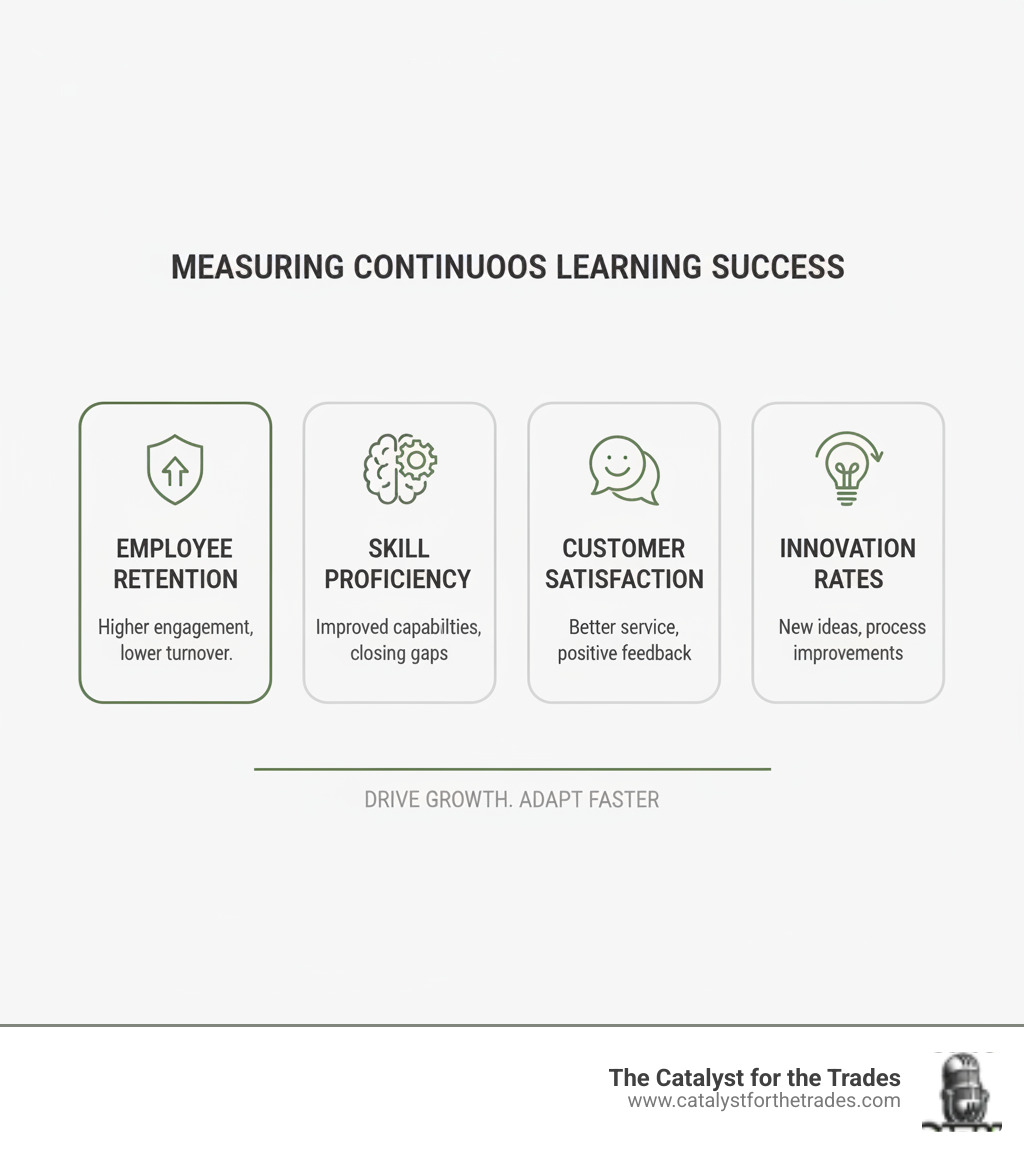
Infographic showing key metrics for measuring continuous learning success including employee retention, skill proficiency, customer satisfaction, and innovation rates - continuous learning infographic

Here are key metrics and indicators to track:

  • Employee Retention Rates: As discussed, continuous learning significantly impacts retention. Monitor changes in turnover rates, especially among employees participating in learning programs. Companies with strong learning cultures have 30% to 50% higher employee engagement and retention rates.
  • Internal Mobility Metrics: Are employees being promoted or moving into new roles within your company? This indicates successful skill development and a strong talent pipeline.
  • Skill Gap Analysis: Regularly assess the skills your team needs versus the skills they possess. Track how learning initiatives are closing these gaps over time.
  • Customer Satisfaction Scores (CSAT): A more skilled and engaged workforce often leads to happier customers. Monitor CSAT scores and look for correlations with learning program participation.
  • New-Hire Readiness: How quickly do new hires become fully productive? Effective onboarding and initial training, coupled with continuous learning pathways, can significantly reduce this time.
  • Quality of Work and Error Rates: Track improvements in the quality of installations, repairs, and service delivery, along with a reduction in errors or callbacks.
  • Revenue Growth and Profitability: Continuous learning should contribute to your bottom line. Look for overall improvements in key financial metrics.
  • Employee Feedback and Engagement Surveys: Directly ask your team about their learning experiences, what they find valuable, and what challenges they face. This qualitative data is just as important as the numbers.

By consistently tracking these metrics, you can demonstrate the tangible benefits of your continuous learning initiatives and make data-driven decisions to optimize your programs, ensuring you're building a profitable, scalable trades business. For more insights on building such a business, check out How to Build a Profitable, Scalable Trades Business: Lessons from Dana Staszkiewicz.

Frequently Asked Questions about Continuous Learning

We get it! When you're running a busy trades business, the idea of adding continuous learning to the mix can feel overwhelming. Let's address the real concerns we hear from trades professionals every day.

How do I find time for learning with a busy field schedule?

This is hands down the biggest question we get, and honestly, it's completely understandable. Your technicians are already stretched thin between service calls, and asking them to find time for learning can feel like asking for the impossible.

The secret isn't finding more time - it's making learning fit into the time you already have. Prioritizing learning starts with treating it like any other essential business activity. Just as you schedule maintenance or inventory checks, learning needs its own space in the calendar.

Microlearning is your best friend here. Instead of thinking about hour-long training sessions, think five-minute videos while waiting for parts to arrive, or quick troubleshooting guides reviewed during lunch breaks. These bite-sized pieces add up faster than you'd expect.

Try scheduling learning time in small, consistent chunks. Even 15 minutes twice a week can make a real difference over time. The key is making it routine, not overwhelming.

Mobile access changes everything too. When your learning resources are available on smartphones or tablets, your team can learn anywhere - in the truck between calls, during downtime, or even at home in the evening.

The real game-changer is integrating learning into daily routines. Can you start team meetings with a quick safety tip? Can you discuss interesting challenges from recent jobs? These natural conversations are learning opportunities in disguise.

Is continuous learning expensive to implement for a small trades business?

Here's some good news - effective continuous learning doesn't require a massive budget. While some advanced training programs can be pricey, there are plenty of smart, cost-effective ways to get started.

The internet is packed with free resources. YouTube channels from industry experts, manufacturer training videos, and free webinars can provide incredible value without costing a penny. Many equipment manufacturers offer free training on their products because they want your technicians to install and service them correctly.

Mentorship programs might be the biggest bang for your buck. Pairing experienced technicians with newer team members costs nothing but time, yet it's one of the most effective ways to transfer knowledge and build skills.

Don't overlook community colleges and trade schools either. Many offer evening or weekend courses specifically designed for working professionals, often at very reasonable rates.

Here's a statistic that might surprise you: 79% of learning and development professionals agree it's less expensive to reskill a current employee than to hire a new one. When you factor in recruitment costs, onboarding time, and the productivity gap while new hires get up to speed, investing in your existing team becomes a no-brainer.

Think of it this way - the ROI of upskilling versus hiring often pays for itself within months, not years.

How can I motivate technicians who are resistant to change?

Change is hard, and some team members will naturally push back against new learning initiatives. The trick is understanding why they're resistant and addressing those concerns directly.

Start by aligning learning with career goals. Instead of presenting learning as something they have to do, show them how it benefits their future. Will mastering smart home technology help them earn more? Will understanding new diagnostic tools make their job easier? When people see "what's in it for them," resistance often melts away.

Peer success stories are incredibly powerful. When a technician sees their colleague get promoted or earn a bonus after completing training, it becomes real and achievable. Share these wins openly and often.

Consider incentives and recognition for learning achievements. This doesn't have to be expensive - sometimes public acknowledgment at team meetings or a preferred parking spot can be just as motivating as financial rewards.

Leadership buy-in is crucial. When managers and owners actively participate in learning themselves, it sends a clear message that this isn't just busy work - it's important for everyone's growth.

Finally, address fears directly. Some resistance comes from worry about failing or looking foolish. Create a safe environment where mistakes are learning opportunities, not reasons for punishment. Start with small, achievable goals and celebrate every success along the way.

The goal isn't to force everyone to love learning overnight. It's to create an environment where growth feels natural, supported, and worthwhile.

Conclusion: Your Next Step in Building a Learning-Powered Business

The trades world never stops moving, and neither should your team's skills. Continuous learning isn't just another business trend you can ignore - it's what separates thriving companies from those barely hanging on. Throughout this journey, we've seen how committing to ongoing growth can transform your business from the inside out.

Think about it: companies that accept continuous learning are 92% more likely to innovate and see 21% higher profitability. Your technicians become more confident, your customers get better service, and your business stays ahead of the curve. That's not just good business - that's smart business.

We've covered a lot of ground together. From understanding the different types of learning that work best for busy field teams, to building systems that actually stick. We've talked about overcoming the real challenges you face - tight schedules, budget constraints, and that one technician who's convinced the old way is the only way. The truth is, every obstacle has a solution when you approach it with the right mindset.

The beauty of continuous learning lies in its flexibility. Whether it's five-minute microlearning sessions between jobs, mentorship programs that pair your veterans with newcomers, or AI-powered tools that personalize training, there's a path that fits your business. The key is starting where you are and building from there.

Your next step doesn't have to be overwhelming. Pick one strategy that resonates with your team's needs. Maybe it's setting up those weekly knowledge-sharing sessions, or finally implementing that mobile learning platform you've been considering. Small steps lead to big changes, especially when they're consistent.

Investing in your people isn't just the right thing to do - it's the profitable thing to do. When your team grows, your business grows. When they feel valued and supported, they stick around longer and work harder. That's how you build something lasting in an industry that's always evolving.

Ready to turn your trades business into a learning powerhouse? The path forward is clearer than you might think. Learn more about growing your trades business and find how we can help you build a culture where growth isn't just encouraged - it's inevitable.

What is Continuous Learning and Why Does It Matter for the Trades?

Continuous learning is the ongoing process of acquiring new skills, knowledge, and expertise throughout your career - and it's becoming essential for trades businesses that want to stay competitive. Unlike traditional training that happens once and stops, continuous learning never ends.

Here's what continuous learning includes:

  • Formal learning - courses, certifications, workshops
  • Social learning - mentorship, peer discussions, team collaboration
  • Self-directed learning - reading, online tutorials, experimenting with new techniques
  • On-the-job learning - observing experienced workers, trying new methods, learning from mistakes

The numbers tell a clear story. Companies that adopt continuous learning are 92% more likely to innovate and 46% more likely to be first to market. With millennials making up 75% of the workforce by 2025 - and 59% saying professional development is extremely important to them - businesses that don't invest in ongoing learning will struggle to attract and keep good people.

For trades businesses specifically, this matters because technology is changing everything. From AI-powered diagnostic tools to new installation techniques, the skills that got your team here won't necessarily get them there. The companies that survive and thrive will be the ones that help their people grow continuously.

But here's the thing - 75% of workers are more likely to quit if they don't get development support. Meanwhile, engaged employees (who often come from companies with strong learning cultures) drive 21% higher profitability and 40% better quality output.

Infographic showing the core benefits of continuous learning including 92% more likely to innovate, 46% more likely to be first to market, 21% increased profitability from engaged employees, 40% increase in quality output, and reduced employee turnover with 65% more likely to stay when feeling empowered - continuous learning infographic

The 'Why': Unpacking the Business Case for Constant Growth

Here's the reality: the trades industry is moving fast, and standing still means falling behind. New technologies pop up monthly, customer expectations keep rising, and what worked five years ago might not cut it today. That's why continuous learning isn't just a nice bonus for your team - it's the difference between thriving and barely surviving.

positive business growth metrics - continuous learning

Competitive Advantage and Innovation

Picture this: your competitor's team is still doing things the old way while your technicians are installing smart thermostats with their eyes closed and troubleshooting complex systems using the latest diagnostic tools. Who do you think customers will choose?

Continuous learning gives your business a real competitive edge. When your team stays current with new techniques, technologies, and industry best practices, you can offer services that others simply can't. The numbers back this up too - companies that adopt a continuous learning approach are 92% more likely to innovate.

Innovation in the trades doesn't mean reinventing the wheel. It might be as simple as finding a faster way to diagnose problems, offering new services like energy audits, or improving how you communicate with customers. When your team is always learning, they're always finding better ways to work.

Employee Retention and Engagement

Let's talk about your workforce. If you're hiring millennials (and you probably are, since they make up most of today's workers), you need to know something important: 59% of millennials say professional development is extremely important when choosing where to work.

Think about what this means for your business. You could be losing great people simply because they don't see opportunities to grow with you. On the flip side, when you invest in continuous learning, you're telling your team that you care about their future. This creates loyalty that's hard to break.

The financial impact is huge. Engaged companies see 21% increased profitability, and their teams produce 40% higher quality work. When people feel valued and see a path forward, they stick around and give their best effort.

Increased Profitability and Improved Customer Experience

Here's where continuous learning really pays off - literally. When your team knows the latest techniques and uses current technology, they work faster, make fewer mistakes, and deliver better results. That means more jobs completed, less time spent on callbacks, and happier customers who refer their friends.

A skilled, confident technician creates a completely different customer experience than someone who's unsure or outdated in their approach. They can explain problems clearly, offer modern solutions, and handle unexpected challenges without breaking a sweat.

Smart companies are already seeing these benefits. They're investing in their people's growth and watching their businesses transform as a result. To see what forward-thinking trades businesses are doing right now, check out The Future of Home Services: What Smart Companies Are Doing Now.

The bottom line? Continuous learning isn't an expense - it's an investment that pays dividends through better work, happier employees, and more profitable operations.

The Landscape of Learning: Types and Approaches

Understanding the "why" behind continuous learning is crucial, but knowing "how" to implement it requires exploring the many ways people actually learn. The good news? Learning isn't confined to dusty classrooms anymore. Today's learning landscape is rich, varied, and perfectly suited for busy trades professionals.

diverse learning environments - continuous learning

Different Types of Continuous Learning

Think of continuous learning as a toolkit with multiple approaches, each serving different needs and learning styles.

Formal learning is what most of us picture when we think "training." This includes structured courses, industry certifications (like HVAC NATE certifications or plumbing licenses), workshops, and webinars. These programs follow a defined curriculum and often come with credentials that customers and employers recognize.

Social learning happens through interaction with others. This is where mentorship programs shine, along with peer discussions and team collaboration. In the trades, there's incredible value in watching a seasoned technician troubleshoot a complex problem. That "aha moment" when you see how experience translates into solutions? That's social learning at its best.

Self-directed learning puts you in the driver's seat. It includes reading industry publications, watching YouTube tutorials (honestly, YouTube is a goldmine for trades professionals), listening to podcasts, and experimenting with new tools or techniques. This approach lets you learn what you need, when you need it.

Microlearning breaks information into bite-sized pieces that busy professionals can actually digest. Think five-minute videos, quick quizzes, or helpful infographics. This approach is perfect for technicians who might only have a few minutes between jobs. Research shows microlearning can increase engagement and improve long-term knowledge retention by up to 50%.

Knowledge Retention and the Forgetting Curve

Here's something we've all experienced: you attend a great training session, feel enlightened, then struggle to remember the key points just weeks later. This isn't a personal failing - it's called the "forgetting curve," and it's a real challenge.

Our memory of newly learned information gets halved within days when not reinforced. That expensive training you invested in? Without follow-up and practice, much of it simply evaporates.

Continuous learning directly tackles this problem. Instead of one-and-done training sessions, it provides ongoing reinforcement through spaced repetition and real-world application. When learning becomes a regular habit rather than a rare event, information moves from short-term to long-term memory where it actually becomes useful.

Continuous Learning vs. Traditional Learning vs. Lifelong Learning

While these terms get thrown around interchangeably, they're actually quite different. Understanding these distinctions helps you choose the right approach for your business needs.

FeatureTraditional LearningLifelong LearningContinuous Learning
Primary GoalObtain a degree/qualification; acquire foundational knowledgePersonal growth, intellectual curiosity, self-fulfillmentSkill development, career advancement, organizational adaptability
DurationFixed period (e.g., degree program, one-off course)Throughout one's entire life, often self-initiatedOngoing, integrated into work/professional life, often employer-driven
FocusBroad subjects, academic knowledgeAny subject of personal interestJob-specific skills, industry trends, professional development
MotivationFormal education, career entryPersonal interest, self-improvementProfessional relevance, career progression, business needs
StructureHighly structured, formalCan be formal or informal, self-pacedBlend of formal, informal, social, often structured by employer
Relevance to TradesApprenticeships, trade school certificationsLearning a new hobby, reading historyMastering new diagnostic tools, learning new installation methods, adapting to smart tech

Traditional learning gives you the foundation - your apprenticeship, trade school, or initial certifications. Lifelong learning is broader and more personal - maybe you're curious about renewable energy or want to understand business finances better.

Continuous learning sits right in the sweet spot for trades businesses. It's specifically designed to keep you and your team professionally sharp and competitive. It's about mastering that new smart thermostat installation, understanding the latest diagnostic software, or learning how to explain complex repairs to customers in simple terms.

The beauty of continuous learning is that it adapts to your world - busy schedules, hands-on work, and constantly evolving technology. It's not about becoming a perpetual student; it's about staying ahead in your trade.

How to Build a Culture of Continuous Learning in Your Trades Business

Building a culture of continuous learning isn't something that happens overnight. It requires intentional effort, commitment, and the right environment. For trades businesses, where schedules are tight and hands are often dirty, it might seem daunting. But trust us, the payoff is immense.

Leadership Commitment and Manager Support

It all starts at the top. When leaders champion continuous learning, it sends a powerful message throughout the organization that growth is valued. Our podcast episode on Embracing Change: The Future of Leadership digs into how vital leadership is in setting the tone for adaptability and development. Leaders need to actively participate in their own learning journeys and visibly support their teams' efforts.

Managers are the linchpins. They're on the front lines, guiding their teams daily. Training managers to support professional development as a core skill is crucial. Unfortunately, only 35% of employees were encouraged to learn by their manager in the past six months. This gap needs to be addressed. Managers should be equipped to identify learning opportunities, provide feedback, and empower their team members to dedicate time to skill-building. When managers prioritize learning, they foster trust and engagement.

Creating Systems for Learning

To make continuous learning a reality, it needs to be systematized, not just left to chance. This means creating clear pathways and resources. Just like Mike Abramowitz explains in How Systems Create Freedom: Mike Abramowitz's Blueprint for Trades Success, good systems free up time and energy.

Consider establishing:

  • Dedicated learning time: Even an hour a week can make a difference.
  • Accessible resources: A shared library of manuals, online courses, or video tutorials.
  • Feedback mechanisms: Regular check-ins and performance reviews that include learning goals.

Overcoming Common Challenges

We know what you're thinking: "Sounds great, but how do we actually do this with our busy schedules?" Implementing continuous learning isn't without its problems.

  • Time Constraints: This is often the biggest challenge for trades businesses. Technicians are out in the field, busy with appointments. The solution lies in flexible, bite-sized learning (microlearning) and integrating learning into daily workflows.
  • Budget Issues: Investing in training can seem expensive, especially for small businesses. However, the ROI on upskilling existing employees often far outweighs the cost of hiring new ones. We'll explore cost-effective options shortly.
  • Employee Resistance: Some team members might be comfortable with the status quo and resistant to learning new ways. This often stems from a fear of failure or a lack of understanding of "what's in it for them." Effective Change Management strategies are key here, emphasizing the benefits to their career and job security.

Strategies for implementing continuous learning

Now that we've tackled the "why" and acknowledged the challenges, let's get actionable. Here are concrete strategies your trades business can use to foster continuous learning:

  • Personalized Learning Paths: One size rarely fits all. Tailor learning opportunities to each employee's current skills, career goals, and preferred learning style. An apprentice might need foundational training, while a senior technician might benefit from advanced diagnostic courses or leadership development. When professional development aligns with personal aspirations, buy-in skyrockets.
  • Mentorship Programs: Pair experienced technicians with newer team members. This is a powerful form of social learning, allowing knowledge transfer and skill development in a real-world context. Mentors gain leadership experience, and mentees benefit from direct guidance. As Jason Walker's playbook for outshining giants in HVAC shows, internal expertise is a huge asset; read more in From Tech to Titan: Jason Walker's Playbook for Outshining Giants in HVAC.
  • Cross-Training and Job Rotations: Encourage technicians to learn skills outside their immediate specialty. A plumbing tech learning basic electrical troubleshooting, or an HVAC installer understanding the nuances of smart thermostat integration, makes your team more versatile and resilient.
  • Knowledge Sharing Sessions: Implement regular (e.g., weekly or monthly) "lunch and learn" sessions where team members share insights, demonstrate new tools, or discuss challenging jobs. This fosters a collaborative learning environment and leverages the collective intelligence of your team.
  • Encouraging Experimentation and Learning from Mistakes: Create a safe space where technicians can try new approaches without fear of severe reprimand if something doesn't go perfectly. Analyzing what went wrong in a constructive way is a powerful learning tool. As we often say, if you Want to Innovate Faster? Start Failing Smarter.

The role of technology in continuous learning

Technology isn't just changing the trades; it's revolutionizing how we learn within them. For continuous learning to be effective and scalable in today's environment, leveraging the right tools is non-negotiable.

technician using an AI-powered diagnostic tool - continuous learning

  • Learning Management Systems (LMS): An LMS acts as a central hub for all your training content. It allows you to deliver online courses, track progress, manage certifications, and provide access to resources 24/7. This is invaluable for organizing formal learning and ensuring compliance.
  • Mobile Learning: Since your technicians are often on the go, mobile-friendly learning is essential. Short videos, checklists, and troubleshooting guides accessible via a smartphone or tablet ensure learning can happen anytime, anywhere – on a job site, during a break, or even while waiting for parts.
  • AI-Driven Tools: Artificial intelligence is a game-changer. AI can personalize learning experiences, recommending courses or modules based on a technician's skill gaps and career goals. It can also power interactive simulations for practicing complex procedures. Lynn Wise, in AI-Driven Success for Contractors: Lynn Wise's Blueprint for the Future, highlights how AI can transform business operations, and learning is a key part of that. Read more about how How AI and Digital Tools Are Changing the Way Home Services Sell.
  • Virtual Reality (VR) for Training: Imagine your apprentice practicing a complex furnace repair or a difficult wiring job in a safe, virtual environment before ever touching a real system. VR offers immersive, hands-on training that reduces risk and accelerates skill acquisition, especially for high-stakes procedures.

Measuring the success of your efforts

So, you've implemented continuous learning strategies. How do you know if they're actually working? Measuring success is crucial for demonstrating ROI, refining your programs, and ensuring your investments are paying off.

Infographic showing key metrics for measuring continuous learning success including employee retention, skill proficiency, customer satisfaction, and innovation rates - continuous learning infographic

Here are key metrics and indicators to track:

  • Employee Retention Rates: As discussed, continuous learning significantly impacts retention. Monitor changes in turnover rates, especially among employees participating in learning programs. Companies with strong learning cultures have 30% to 50% higher employee engagement and retention rates.
  • Internal Mobility Metrics: Are employees being promoted or moving into new roles within your company? This indicates successful skill development and a strong talent pipeline.
  • Skill Gap Analysis: Regularly assess the skills your team needs versus the skills they possess. Track how learning initiatives are closing these gaps over time.
  • Customer Satisfaction Scores (CSAT): A more skilled and engaged workforce often leads to happier customers. Monitor CSAT scores and look for correlations with learning program participation.
  • New-Hire Readiness: How quickly do new hires become fully productive? Effective onboarding and initial training, coupled with continuous learning pathways, can significantly reduce this time.
  • Quality of Work and Error Rates: Track improvements in the quality of installations, repairs, and service delivery, along with a reduction in errors or callbacks.
  • Revenue Growth and Profitability: Continuous learning should contribute to your bottom line. Look for overall improvements in key financial metrics.
  • Employee Feedback and Engagement Surveys: Directly ask your team about their learning experiences, what they find valuable, and what challenges they face. This qualitative data is just as important as the numbers.

By consistently tracking these metrics, you can demonstrate the tangible benefits of your continuous learning initiatives and make data-driven decisions to optimize your programs, ensuring you're building a profitable, scalable trades business. For more insights on building such a business, check out How to Build a Profitable, Scalable Trades Business: Lessons from Dana Staszkiewicz.

Frequently Asked Questions about Continuous Learning

We get it! When you're running a busy trades business, the idea of adding continuous learning to the mix can feel overwhelming. Let's address the real concerns we hear from trades professionals every day.

How do I find time for learning with a busy field schedule?

This is hands down the biggest question we get, and honestly, it's completely understandable. Your technicians are already stretched thin between service calls, and asking them to find time for learning can feel like asking for the impossible.

The secret isn't finding more time - it's making learning fit into the time you already have. Prioritizing learning starts with treating it like any other essential business activity. Just as you schedule maintenance or inventory checks, learning needs its own space in the calendar.

Microlearning is your best friend here. Instead of thinking about hour-long training sessions, think five-minute videos while waiting for parts to arrive, or quick troubleshooting guides reviewed during lunch breaks. These bite-sized pieces add up faster than you'd expect.

Try scheduling learning time in small, consistent chunks. Even 15 minutes twice a week can make a real difference over time. The key is making it routine, not overwhelming.

Mobile access changes everything too. When your learning resources are available on smartphones or tablets, your team can learn anywhere - in the truck between calls, during downtime, or even at home in the evening.

The real game-changer is integrating learning into daily routines. Can you start team meetings with a quick safety tip? Can you discuss interesting challenges from recent jobs? These natural conversations are learning opportunities in disguise.

Is continuous learning expensive to implement for a small trades business?

Here's some good news - effective continuous learning doesn't require a massive budget. While some advanced training programs can be pricey, there are plenty of smart, cost-effective ways to get started.

The internet is packed with free resources. YouTube channels from industry experts, manufacturer training videos, and free webinars can provide incredible value without costing a penny. Many equipment manufacturers offer free training on their products because they want your technicians to install and service them correctly.

Mentorship programs might be the biggest bang for your buck. Pairing experienced technicians with newer team members costs nothing but time, yet it's one of the most effective ways to transfer knowledge and build skills.

Don't overlook community colleges and trade schools either. Many offer evening or weekend courses specifically designed for working professionals, often at very reasonable rates.

Here's a statistic that might surprise you: 79% of learning and development professionals agree it's less expensive to reskill a current employee than to hire a new one. When you factor in recruitment costs, onboarding time, and the productivity gap while new hires get up to speed, investing in your existing team becomes a no-brainer.

Think of it this way - the ROI of upskilling versus hiring often pays for itself within months, not years.

How can I motivate technicians who are resistant to change?

Change is hard, and some team members will naturally push back against new learning initiatives. The trick is understanding why they're resistant and addressing those concerns directly.

Start by aligning learning with career goals. Instead of presenting learning as something they have to do, show them how it benefits their future. Will mastering smart home technology help them earn more? Will understanding new diagnostic tools make their job easier? When people see "what's in it for them," resistance often melts away.

Peer success stories are incredibly powerful. When a technician sees their colleague get promoted or earn a bonus after completing training, it becomes real and achievable. Share these wins openly and often.

Consider incentives and recognition for learning achievements. This doesn't have to be expensive - sometimes public acknowledgment at team meetings or a preferred parking spot can be just as motivating as financial rewards.

Leadership buy-in is crucial. When managers and owners actively participate in learning themselves, it sends a clear message that this isn't just busy work - it's important for everyone's growth.

Finally, address fears directly. Some resistance comes from worry about failing or looking foolish. Create a safe environment where mistakes are learning opportunities, not reasons for punishment. Start with small, achievable goals and celebrate every success along the way.

The goal isn't to force everyone to love learning overnight. It's to create an environment where growth feels natural, supported, and worthwhile.

Conclusion: Your Next Step in Building a Learning-Powered Business

The trades world never stops moving, and neither should your team's skills. Continuous learning isn't just another business trend you can ignore - it's what separates thriving companies from those barely hanging on. Throughout this journey, we've seen how committing to ongoing growth can transform your business from the inside out.

Think about it: companies that accept continuous learning are 92% more likely to innovate and see 21% higher profitability. Your technicians become more confident, your customers get better service, and your business stays ahead of the curve. That's not just good business - that's smart business.

We've covered a lot of ground together. From understanding the different types of learning that work best for busy field teams, to building systems that actually stick. We've talked about overcoming the real challenges you face - tight schedules, budget constraints, and that one technician who's convinced the old way is the only way. The truth is, every obstacle has a solution when you approach it with the right mindset.

The beauty of continuous learning lies in its flexibility. Whether it's five-minute microlearning sessions between jobs, mentorship programs that pair your veterans with newcomers, or AI-powered tools that personalize training, there's a path that fits your business. The key is starting where you are and building from there.

Your next step doesn't have to be overwhelming. Pick one strategy that resonates with your team's needs. Maybe it's setting up those weekly knowledge-sharing sessions, or finally implementing that mobile learning platform you've been considering. Small steps lead to big changes, especially when they're consistent.

Investing in your people isn't just the right thing to do - it's the profitable thing to do. When your team grows, your business grows. When they feel valued and supported, they stick around longer and work harder. That's how you build something lasting in an industry that's always evolving.

Ready to turn your trades business into a learning powerhouse? The path forward is clearer than you might think. Learn more about growing your trades business and find how we can help you build a culture where growth isn't just encouraged - it's inevitable.

What is Continuous Learning and Why Does It Matter for the Trades?

Continuous learning is the ongoing process of acquiring new skills, knowledge, and expertise throughout your career - and it's becoming essential for trades businesses that want to stay competitive. Unlike traditional training that happens once and stops, continuous learning never ends.

Here's what continuous learning includes:

  • Formal learning - courses, certifications, workshops
  • Social learning - mentorship, peer discussions, team collaboration
  • Self-directed learning - reading, online tutorials, experimenting with new techniques
  • On-the-job learning - observing experienced workers, trying new methods, learning from mistakes

The numbers tell a clear story. Companies that adopt continuous learning are 92% more likely to innovate and 46% more likely to be first to market. With millennials making up 75% of the workforce by 2025 - and 59% saying professional development is extremely important to them - businesses that don't invest in ongoing learning will struggle to attract and keep good people.

For trades businesses specifically, this matters because technology is changing everything. From AI-powered diagnostic tools to new installation techniques, the skills that got your team here won't necessarily get them there. The companies that survive and thrive will be the ones that help their people grow continuously.

But here's the thing - 75% of workers are more likely to quit if they don't get development support. Meanwhile, engaged employees (who often come from companies with strong learning cultures) drive 21% higher profitability and 40% better quality output.

Infographic showing the core benefits of continuous learning including 92% more likely to innovate, 46% more likely to be first to market, 21% increased profitability from engaged employees, 40% increase in quality output, and reduced employee turnover with 65% more likely to stay when feeling empowered - continuous learning infographic

The 'Why': Unpacking the Business Case for Constant Growth

Here's the reality: the trades industry is moving fast, and standing still means falling behind. New technologies pop up monthly, customer expectations keep rising, and what worked five years ago might not cut it today. That's why continuous learning isn't just a nice bonus for your team - it's the difference between thriving and barely surviving.

positive business growth metrics - continuous learning

Competitive Advantage and Innovation

Picture this: your competitor's team is still doing things the old way while your technicians are installing smart thermostats with their eyes closed and troubleshooting complex systems using the latest diagnostic tools. Who do you think customers will choose?

Continuous learning gives your business a real competitive edge. When your team stays current with new techniques, technologies, and industry best practices, you can offer services that others simply can't. The numbers back this up too - companies that adopt a continuous learning approach are 92% more likely to innovate.

Innovation in the trades doesn't mean reinventing the wheel. It might be as simple as finding a faster way to diagnose problems, offering new services like energy audits, or improving how you communicate with customers. When your team is always learning, they're always finding better ways to work.

Employee Retention and Engagement

Let's talk about your workforce. If you're hiring millennials (and you probably are, since they make up most of today's workers), you need to know something important: 59% of millennials say professional development is extremely important when choosing where to work.

Think about what this means for your business. You could be losing great people simply because they don't see opportunities to grow with you. On the flip side, when you invest in continuous learning, you're telling your team that you care about their future. This creates loyalty that's hard to break.

The financial impact is huge. Engaged companies see 21% increased profitability, and their teams produce 40% higher quality work. When people feel valued and see a path forward, they stick around and give their best effort.

Increased Profitability and Improved Customer Experience

Here's where continuous learning really pays off - literally. When your team knows the latest techniques and uses current technology, they work faster, make fewer mistakes, and deliver better results. That means more jobs completed, less time spent on callbacks, and happier customers who refer their friends.

A skilled, confident technician creates a completely different customer experience than someone who's unsure or outdated in their approach. They can explain problems clearly, offer modern solutions, and handle unexpected challenges without breaking a sweat.

Smart companies are already seeing these benefits. They're investing in their people's growth and watching their businesses transform as a result. To see what forward-thinking trades businesses are doing right now, check out The Future of Home Services: What Smart Companies Are Doing Now.

The bottom line? Continuous learning isn't an expense - it's an investment that pays dividends through better work, happier employees, and more profitable operations.

The Landscape of Learning: Types and Approaches

Understanding the "why" behind continuous learning is crucial, but knowing "how" to implement it requires exploring the many ways people actually learn. The good news? Learning isn't confined to dusty classrooms anymore. Today's learning landscape is rich, varied, and perfectly suited for busy trades professionals.

diverse learning environments - continuous learning

Different Types of Continuous Learning

Think of continuous learning as a toolkit with multiple approaches, each serving different needs and learning styles.

Formal learning is what most of us picture when we think "training." This includes structured courses, industry certifications (like HVAC NATE certifications or plumbing licenses), workshops, and webinars. These programs follow a defined curriculum and often come with credentials that customers and employers recognize.

Social learning happens through interaction with others. This is where mentorship programs shine, along with peer discussions and team collaboration. In the trades, there's incredible value in watching a seasoned technician troubleshoot a complex problem. That "aha moment" when you see how experience translates into solutions? That's social learning at its best.

Self-directed learning puts you in the driver's seat. It includes reading industry publications, watching YouTube tutorials (honestly, YouTube is a goldmine for trades professionals), listening to podcasts, and experimenting with new tools or techniques. This approach lets you learn what you need, when you need it.

Microlearning breaks information into bite-sized pieces that busy professionals can actually digest. Think five-minute videos, quick quizzes, or helpful infographics. This approach is perfect for technicians who might only have a few minutes between jobs. Research shows microlearning can increase engagement and improve long-term knowledge retention by up to 50%.

Knowledge Retention and the Forgetting Curve

Here's something we've all experienced: you attend a great training session, feel enlightened, then struggle to remember the key points just weeks later. This isn't a personal failing - it's called the "forgetting curve," and it's a real challenge.

Our memory of newly learned information gets halved within days when not reinforced. That expensive training you invested in? Without follow-up and practice, much of it simply evaporates.

Continuous learning directly tackles this problem. Instead of one-and-done training sessions, it provides ongoing reinforcement through spaced repetition and real-world application. When learning becomes a regular habit rather than a rare event, information moves from short-term to long-term memory where it actually becomes useful.

Continuous Learning vs. Traditional Learning vs. Lifelong Learning

While these terms get thrown around interchangeably, they're actually quite different. Understanding these distinctions helps you choose the right approach for your business needs.

FeatureTraditional LearningLifelong LearningContinuous Learning
Primary GoalObtain a degree/qualification; acquire foundational knowledgePersonal growth, intellectual curiosity, self-fulfillmentSkill development, career advancement, organizational adaptability
DurationFixed period (e.g., degree program, one-off course)Throughout one's entire life, often self-initiatedOngoing, integrated into work/professional life, often employer-driven
FocusBroad subjects, academic knowledgeAny subject of personal interestJob-specific skills, industry trends, professional development
MotivationFormal education, career entryPersonal interest, self-improvementProfessional relevance, career progression, business needs
StructureHighly structured, formalCan be formal or informal, self-pacedBlend of formal, informal, social, often structured by employer
Relevance to TradesApprenticeships, trade school certificationsLearning a new hobby, reading historyMastering new diagnostic tools, learning new installation methods, adapting to smart tech

Traditional learning gives you the foundation - your apprenticeship, trade school, or initial certifications. Lifelong learning is broader and more personal - maybe you're curious about renewable energy or want to understand business finances better.

Continuous learning sits right in the sweet spot for trades businesses. It's specifically designed to keep you and your team professionally sharp and competitive. It's about mastering that new smart thermostat installation, understanding the latest diagnostic software, or learning how to explain complex repairs to customers in simple terms.

The beauty of continuous learning is that it adapts to your world - busy schedules, hands-on work, and constantly evolving technology. It's not about becoming a perpetual student; it's about staying ahead in your trade.

How to Build a Culture of Continuous Learning in Your Trades Business

Building a culture of continuous learning isn't something that happens overnight. It requires intentional effort, commitment, and the right environment. For trades businesses, where schedules are tight and hands are often dirty, it might seem daunting. But trust us, the payoff is immense.

Leadership Commitment and Manager Support

It all starts at the top. When leaders champion continuous learning, it sends a powerful message throughout the organization that growth is valued. Our podcast episode on Embracing Change: The Future of Leadership digs into how vital leadership is in setting the tone for adaptability and development. Leaders need to actively participate in their own learning journeys and visibly support their teams' efforts.

Managers are the linchpins. They're on the front lines, guiding their teams daily. Training managers to support professional development as a core skill is crucial. Unfortunately, only 35% of employees were encouraged to learn by their manager in the past six months. This gap needs to be addressed. Managers should be equipped to identify learning opportunities, provide feedback, and empower their team members to dedicate time to skill-building. When managers prioritize learning, they foster trust and engagement.

Creating Systems for Learning

To make continuous learning a reality, it needs to be systematized, not just left to chance. This means creating clear pathways and resources. Just like Mike Abramowitz explains in How Systems Create Freedom: Mike Abramowitz's Blueprint for Trades Success, good systems free up time and energy.

Consider establishing:

  • Dedicated learning time: Even an hour a week can make a difference.
  • Accessible resources: A shared library of manuals, online courses, or video tutorials.
  • Feedback mechanisms: Regular check-ins and performance reviews that include learning goals.

Overcoming Common Challenges

We know what you're thinking: "Sounds great, but how do we actually do this with our busy schedules?" Implementing continuous learning isn't without its problems.

  • Time Constraints: This is often the biggest challenge for trades businesses. Technicians are out in the field, busy with appointments. The solution lies in flexible, bite-sized learning (microlearning) and integrating learning into daily workflows.
  • Budget Issues: Investing in training can seem expensive, especially for small businesses. However, the ROI on upskilling existing employees often far outweighs the cost of hiring new ones. We'll explore cost-effective options shortly.
  • Employee Resistance: Some team members might be comfortable with the status quo and resistant to learning new ways. This often stems from a fear of failure or a lack of understanding of "what's in it for them." Effective Change Management strategies are key here, emphasizing the benefits to their career and job security.

Strategies for implementing continuous learning

Now that we've tackled the "why" and acknowledged the challenges, let's get actionable. Here are concrete strategies your trades business can use to foster continuous learning:

  • Personalized Learning Paths: One size rarely fits all. Tailor learning opportunities to each employee's current skills, career goals, and preferred learning style. An apprentice might need foundational training, while a senior technician might benefit from advanced diagnostic courses or leadership development. When professional development aligns with personal aspirations, buy-in skyrockets.
  • Mentorship Programs: Pair experienced technicians with newer team members. This is a powerful form of social learning, allowing knowledge transfer and skill development in a real-world context. Mentors gain leadership experience, and mentees benefit from direct guidance. As Jason Walker's playbook for outshining giants in HVAC shows, internal expertise is a huge asset; read more in From Tech to Titan: Jason Walker's Playbook for Outshining Giants in HVAC.
  • Cross-Training and Job Rotations: Encourage technicians to learn skills outside their immediate specialty. A plumbing tech learning basic electrical troubleshooting, or an HVAC installer understanding the nuances of smart thermostat integration, makes your team more versatile and resilient.
  • Knowledge Sharing Sessions: Implement regular (e.g., weekly or monthly) "lunch and learn" sessions where team members share insights, demonstrate new tools, or discuss challenging jobs. This fosters a collaborative learning environment and leverages the collective intelligence of your team.
  • Encouraging Experimentation and Learning from Mistakes: Create a safe space where technicians can try new approaches without fear of severe reprimand if something doesn't go perfectly. Analyzing what went wrong in a constructive way is a powerful learning tool. As we often say, if you Want to Innovate Faster? Start Failing Smarter.

The role of technology in continuous learning

Technology isn't just changing the trades; it's revolutionizing how we learn within them. For continuous learning to be effective and scalable in today's environment, leveraging the right tools is non-negotiable.

technician using an AI-powered diagnostic tool - continuous learning

  • Learning Management Systems (LMS): An LMS acts as a central hub for all your training content. It allows you to deliver online courses, track progress, manage certifications, and provide access to resources 24/7. This is invaluable for organizing formal learning and ensuring compliance.
  • Mobile Learning: Since your technicians are often on the go, mobile-friendly learning is essential. Short videos, checklists, and troubleshooting guides accessible via a smartphone or tablet ensure learning can happen anytime, anywhere – on a job site, during a break, or even while waiting for parts.
  • AI-Driven Tools: Artificial intelligence is a game-changer. AI can personalize learning experiences, recommending courses or modules based on a technician's skill gaps and career goals. It can also power interactive simulations for practicing complex procedures. Lynn Wise, in AI-Driven Success for Contractors: Lynn Wise's Blueprint for the Future, highlights how AI can transform business operations, and learning is a key part of that. Read more about how How AI and Digital Tools Are Changing the Way Home Services Sell.
  • Virtual Reality (VR) for Training: Imagine your apprentice practicing a complex furnace repair or a difficult wiring job in a safe, virtual environment before ever touching a real system. VR offers immersive, hands-on training that reduces risk and accelerates skill acquisition, especially for high-stakes procedures.

Measuring the success of your efforts

So, you've implemented continuous learning strategies. How do you know if they're actually working? Measuring success is crucial for demonstrating ROI, refining your programs, and ensuring your investments are paying off.

Infographic showing key metrics for measuring continuous learning success including employee retention, skill proficiency, customer satisfaction, and innovation rates - continuous learning infographic

Here are key metrics and indicators to track:

  • Employee Retention Rates: As discussed, continuous learning significantly impacts retention. Monitor changes in turnover rates, especially among employees participating in learning programs. Companies with strong learning cultures have 30% to 50% higher employee engagement and retention rates.
  • Internal Mobility Metrics: Are employees being promoted or moving into new roles within your company? This indicates successful skill development and a strong talent pipeline.
  • Skill Gap Analysis: Regularly assess the skills your team needs versus the skills they possess. Track how learning initiatives are closing these gaps over time.
  • Customer Satisfaction Scores (CSAT): A more skilled and engaged workforce often leads to happier customers. Monitor CSAT scores and look for correlations with learning program participation.
  • New-Hire Readiness: How quickly do new hires become fully productive? Effective onboarding and initial training, coupled with continuous learning pathways, can significantly reduce this time.
  • Quality of Work and Error Rates: Track improvements in the quality of installations, repairs, and service delivery, along with a reduction in errors or callbacks.
  • Revenue Growth and Profitability: Continuous learning should contribute to your bottom line. Look for overall improvements in key financial metrics.
  • Employee Feedback and Engagement Surveys: Directly ask your team about their learning experiences, what they find valuable, and what challenges they face. This qualitative data is just as important as the numbers.

By consistently tracking these metrics, you can demonstrate the tangible benefits of your continuous learning initiatives and make data-driven decisions to optimize your programs, ensuring you're building a profitable, scalable trades business. For more insights on building such a business, check out How to Build a Profitable, Scalable Trades Business: Lessons from Dana Staszkiewicz.

Frequently Asked Questions about Continuous Learning

We get it! When you're running a busy trades business, the idea of adding continuous learning to the mix can feel overwhelming. Let's address the real concerns we hear from trades professionals every day.

How do I find time for learning with a busy field schedule?

This is hands down the biggest question we get, and honestly, it's completely understandable. Your technicians are already stretched thin between service calls, and asking them to find time for learning can feel like asking for the impossible.

The secret isn't finding more time - it's making learning fit into the time you already have. Prioritizing learning starts with treating it like any other essential business activity. Just as you schedule maintenance or inventory checks, learning needs its own space in the calendar.

Microlearning is your best friend here. Instead of thinking about hour-long training sessions, think five-minute videos while waiting for parts to arrive, or quick troubleshooting guides reviewed during lunch breaks. These bite-sized pieces add up faster than you'd expect.

Try scheduling learning time in small, consistent chunks. Even 15 minutes twice a week can make a real difference over time. The key is making it routine, not overwhelming.

Mobile access changes everything too. When your learning resources are available on smartphones or tablets, your team can learn anywhere - in the truck between calls, during downtime, or even at home in the evening.

The real game-changer is integrating learning into daily routines. Can you start team meetings with a quick safety tip? Can you discuss interesting challenges from recent jobs? These natural conversations are learning opportunities in disguise.

Is continuous learning expensive to implement for a small trades business?

Here's some good news - effective continuous learning doesn't require a massive budget. While some advanced training programs can be pricey, there are plenty of smart, cost-effective ways to get started.

The internet is packed with free resources. YouTube channels from industry experts, manufacturer training videos, and free webinars can provide incredible value without costing a penny. Many equipment manufacturers offer free training on their products because they want your technicians to install and service them correctly.

Mentorship programs might be the biggest bang for your buck. Pairing experienced technicians with newer team members costs nothing but time, yet it's one of the most effective ways to transfer knowledge and build skills.

Don't overlook community colleges and trade schools either. Many offer evening or weekend courses specifically designed for working professionals, often at very reasonable rates.

Here's a statistic that might surprise you: 79% of learning and development professionals agree it's less expensive to reskill a current employee than to hire a new one. When you factor in recruitment costs, onboarding time, and the productivity gap while new hires get up to speed, investing in your existing team becomes a no-brainer.

Think of it this way - the ROI of upskilling versus hiring often pays for itself within months, not years.

How can I motivate technicians who are resistant to change?

Change is hard, and some team members will naturally push back against new learning initiatives. The trick is understanding why they're resistant and addressing those concerns directly.

Start by aligning learning with career goals. Instead of presenting learning as something they have to do, show them how it benefits their future. Will mastering smart home technology help them earn more? Will understanding new diagnostic tools make their job easier? When people see "what's in it for them," resistance often melts away.

Peer success stories are incredibly powerful. When a technician sees their colleague get promoted or earn a bonus after completing training, it becomes real and achievable. Share these wins openly and often.

Consider incentives and recognition for learning achievements. This doesn't have to be expensive - sometimes public acknowledgment at team meetings or a preferred parking spot can be just as motivating as financial rewards.

Leadership buy-in is crucial. When managers and owners actively participate in learning themselves, it sends a clear message that this isn't just busy work - it's important for everyone's growth.

Finally, address fears directly. Some resistance comes from worry about failing or looking foolish. Create a safe environment where mistakes are learning opportunities, not reasons for punishment. Start with small, achievable goals and celebrate every success along the way.

The goal isn't to force everyone to love learning overnight. It's to create an environment where growth feels natural, supported, and worthwhile.

Conclusion: Your Next Step in Building a Learning-Powered Business

The trades world never stops moving, and neither should your team's skills. Continuous learning isn't just another business trend you can ignore - it's what separates thriving companies from those barely hanging on. Throughout this journey, we've seen how committing to ongoing growth can transform your business from the inside out.

Think about it: companies that accept continuous learning are 92% more likely to innovate and see 21% higher profitability. Your technicians become more confident, your customers get better service, and your business stays ahead of the curve. That's not just good business - that's smart business.

We've covered a lot of ground together. From understanding the different types of learning that work best for busy field teams, to building systems that actually stick. We've talked about overcoming the real challenges you face - tight schedules, budget constraints, and that one technician who's convinced the old way is the only way. The truth is, every obstacle has a solution when you approach it with the right mindset.

The beauty of continuous learning lies in its flexibility. Whether it's five-minute microlearning sessions between jobs, mentorship programs that pair your veterans with newcomers, or AI-powered tools that personalize training, there's a path that fits your business. The key is starting where you are and building from there.

Your next step doesn't have to be overwhelming. Pick one strategy that resonates with your team's needs. Maybe it's setting up those weekly knowledge-sharing sessions, or finally implementing that mobile learning platform you've been considering. Small steps lead to big changes, especially when they're consistent.

Investing in your people isn't just the right thing to do - it's the profitable thing to do. When your team grows, your business grows. When they feel valued and supported, they stick around longer and work harder. That's how you build something lasting in an industry that's always evolving.

Ready to turn your trades business into a learning powerhouse? The path forward is clearer than you might think. Learn more about growing your trades business and find how we can help you build a culture where growth isn't just encouraged - it's inevitable.

Episodes you may like

The Talent Pipeline: A Strategic Blueprint for Success

Build a robust talent pipeline development strategy. Gain a competitive edge, improve hiring, and ensure long-term success for your trades business.

Read more
Published
December 12, 2025
Know Your Numbers, Grow Your Business: Financial Strategies for Trades

For many trade business owners, the word "accounting" can trigger a headache. But what if your financials could be transformed from a source of stress into your most powerful tool for growth?

Read more
Published
December 12, 2025
The Change-Up: Mastering Organizational Evolution

Navigate organizational change effectively. Discover leadership strategies to overcome resistance, boost employee investment, and ensure growth.

Read more
Published
December 11, 2025